
Accessibility
- Admission
Admission is free of charge for holders of a Shintai Shogaisha Techo (certificate of physical disability), Ai no Techo or Ryoiku Techo (certificate of intellectual disability), Seishin Shogaisha Hoken Fukushi Techo (certificate of mental disability), or Hibakusha Kenko Techo (atomic bomb survivor’s health handbook), along with up to 2 caregivers (MIRAIRO ID accepted). Please show your certificate or MIRAIRO ID to staff at the main gate. You will receive an admission ticket with a QR code.
- Priority Parking
Priority parking is available on the museum grounds. Please contact us in advance if you wish to use it.
The priority parking spaces for persons with disabilities are free of charge upon presentation of a disability certificate (MIRAIRO ID accepted). Please show your certificate or MIRAIRO ID to staff at the main gate.
- Guide Dogs, Service Dogs, and Hearing Dogs
These assistance dogs are welcome on the premises.
- Support Staff
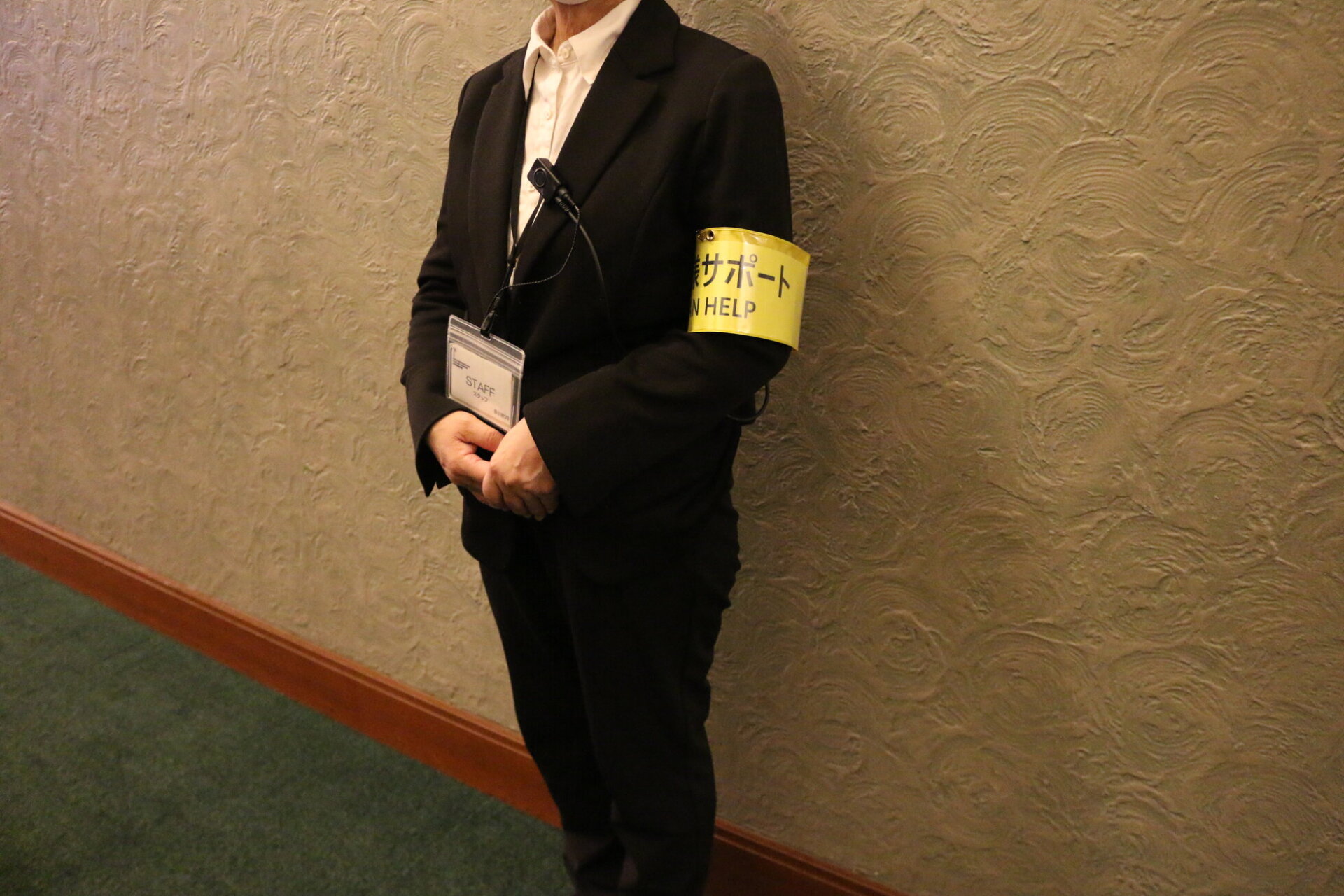
Staff members wearing yellow armbands are available to assist visitors who may need help using the facilities or viewing the exhibitions. If you have difficulty seeing a particular work, staff can show it to you on a tablet or similar device. Please do not hesitate to ask for help.
- Accessible Route Guide
A photo-illustrated guide to a gentle-gradient route from JR Meguro Station to the museum is available.
Accessible Route Guide (PDF, 4.61 MB)(Japanese only)
- Route Guide for Visitors with Visual Impairments
A route guide from JR Meguro Station to the museum for visitors with visual impairments is available.
Route Guide for Visitors with Visual Impairments (PDF, 2.35 MB)(Japanese only)
- Universal Guidebook
The Main Building (Former Residence of Prince Asaka) dates from 1933. Because it retains its original architecture, some doorways are narrow (approximately 70–80 cm), and there are small height differentials, including at entrances and exits.
For information on height differentials and other access points, please consult the Universal Guidebook.
Universal Guidebook (PDF, 10.96 MB)(Japanese only)
- Accessible Restrooms
Accessible restrooms are located on the first floor of the Main Building, the first floor of the Annex, in the European Garden, and in the restaurant.
・Main Building, first floor: wheelchair accessible, ostomate facilities, diaper-changing table.
・Annex, first floor: wheelchair accessible, ostomate facilities, diaper-changing table, baby chair.
・European Garden: wheelchair accessible, ostomate facilities, diaper-changing table, baby chair.
・Restaurant: wheelchair accessible, ostomate facilities, diaper-changing table, baby chair.- The accessible restroom in the restaurant is available only to restaurant patrons.
- First-Aid Room
There is a first-aid room located on the first floor of the Main Building. If you feel unwell, please ask a nearby staff member for guidance.
- Elevator
The Main Building has a wheelchair-accessible elevator up to the second floor.
Some exhibitions include the third floor, which is accessible only by stairs.
- Water Servers and Drinking Fountains
A water server is available in the Main Building Welcome Room, and a drinking fountain is located in the European Garden.
- Floor Maps
For a map of the entire site and a floor map of the museum, please see our website’s Site Area & Floor Map.
- Accessible Garden Path
The garden has a path accessible to wheelchairs and strollers. To see the path, please see our website’s Garden Map. (in Japanese [partially in English])
- Videos Introducing Facilities
・Japanese Sign Language facility introduction video (with Japanese audio guide and Japanese subtitles)
・Japanese Sign Language introduction video for the Former Residence of Prince Asaka (Main Building) (with Japanese audio guide and Japanese subtitles)
・Kōka Teahouse introduction video (with Japanese Sign Language and Japanese subtitles)
・Kōka Teahouse introduction video (with English narration and English subtitles)
- Using a Wheelchair in the Museum
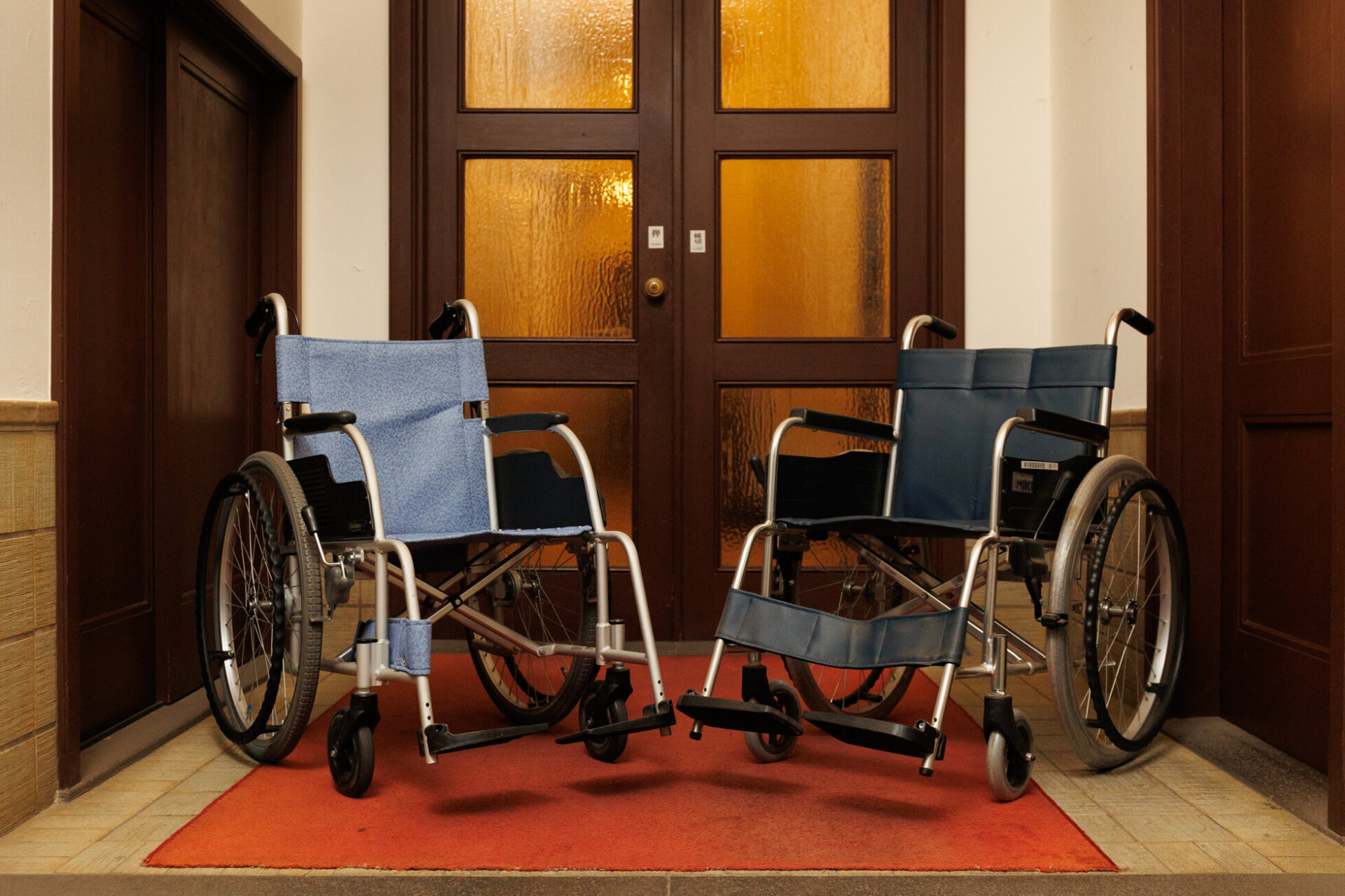
The Main Building (Former Residence of Prince Asaka) dates from 1933. Because it retains its original architecture, some doorways are narrow (approximately 70–80 cm), which may make it difficult to pass through in certain wheelchairs. In such cases, we recommend transferring to one of the wheelchairs available at the museum.
There are also small height differentials, including at entrances and exits, but ramps are in place when the museum is open.
For information on height differentials and other access points, please see the Universal Guidebook.
Universal Guidebook (PDF, 10.96 MB)(Japanese only)
- Wheelchairs for loan
Wheelchairs (self-propelled or attendant-propelled) are available for loan. If you would like to use one, please ask reception staff.
- Elevator
The Main Building has a wheelchair-accessible elevator up to the second floor.
Some exhibitions include the third floor, which is accessible only by stairs.
- Accessible Garden Path
The garden has a path accessible to wheelchairs and strollers. To see the path, please see our website’s Garden Map. (in Japanese [partially in English])
- Accessible Route Guide
A photo-illustrated guide to a gentle-gradient route from JR Meguro Station to the museum is available.
Accessible Route Guide (PDF, 4.61 MB)(Japanese only)
- Using a Stroller in the Museum
To protect the works on view and preserve the historic architecture, strollers are not permitted inside the Main Building. Please bring a baby carrier or sling.- Strollers can be left with reception staff.
- Strollers are permitted in the Main Building during G(ALL)ERY Day “Baby Hours.”
For details, please see our website’s G(ALL)ERY Day page.
- Nursing Room
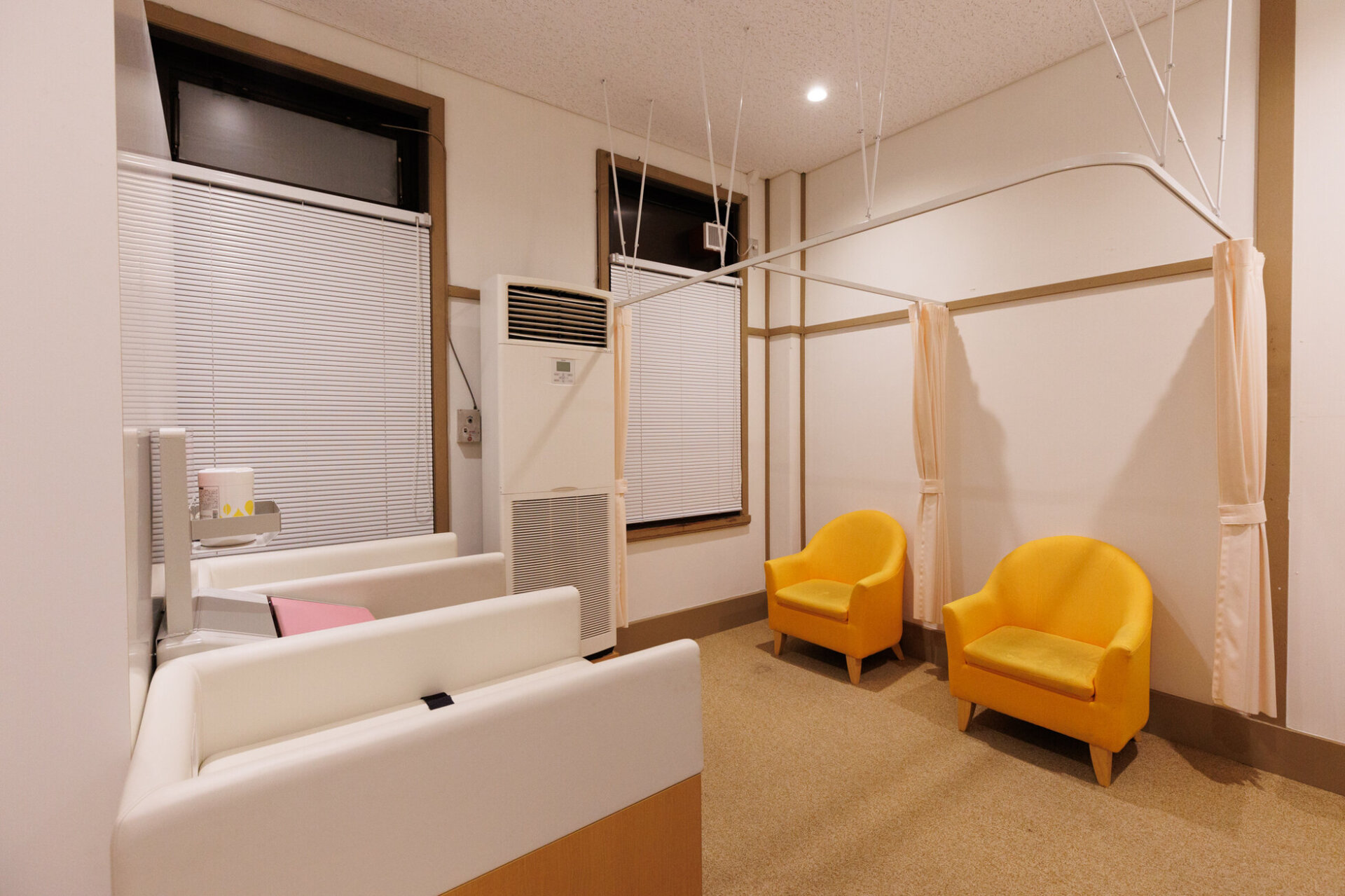
A nursing room is located on the first floor of the Main Building. If you would like to use it, please ask a staff member.
Visitors with garden admission can also use the Main Building nursing room when an exhibition is being held. Please ask a staff member.
- Diaper-Changing Tables and Baby Chairs
Diaper-changing tables are located in the nursing room and in the accessible restrooms on the first floor of the Main Building, the first floor of the Annex, the European Garden, and the restaurant.
Baby chairs are located in the accessible restrooms on the first floor of the Annex, the European Garden, and the restaurant.- The accessible restroom in the restaurant is available only to restaurant patrons.
- Accessible Garden Path
The garden has a path accessible to wheelchairs and strollers. To see the path, please see our website’s Garden Map. (in Japanese [partially in English])
- Accessible Route Guide
A photo-illustrated guide to a gentle-gradient route from JR Meguro Station to the museum is available.
Accessible Route Guide (PDF, 4.61 MB)(Japanese only)
- Tactile Guide Map (Booklet) (Japanese only)
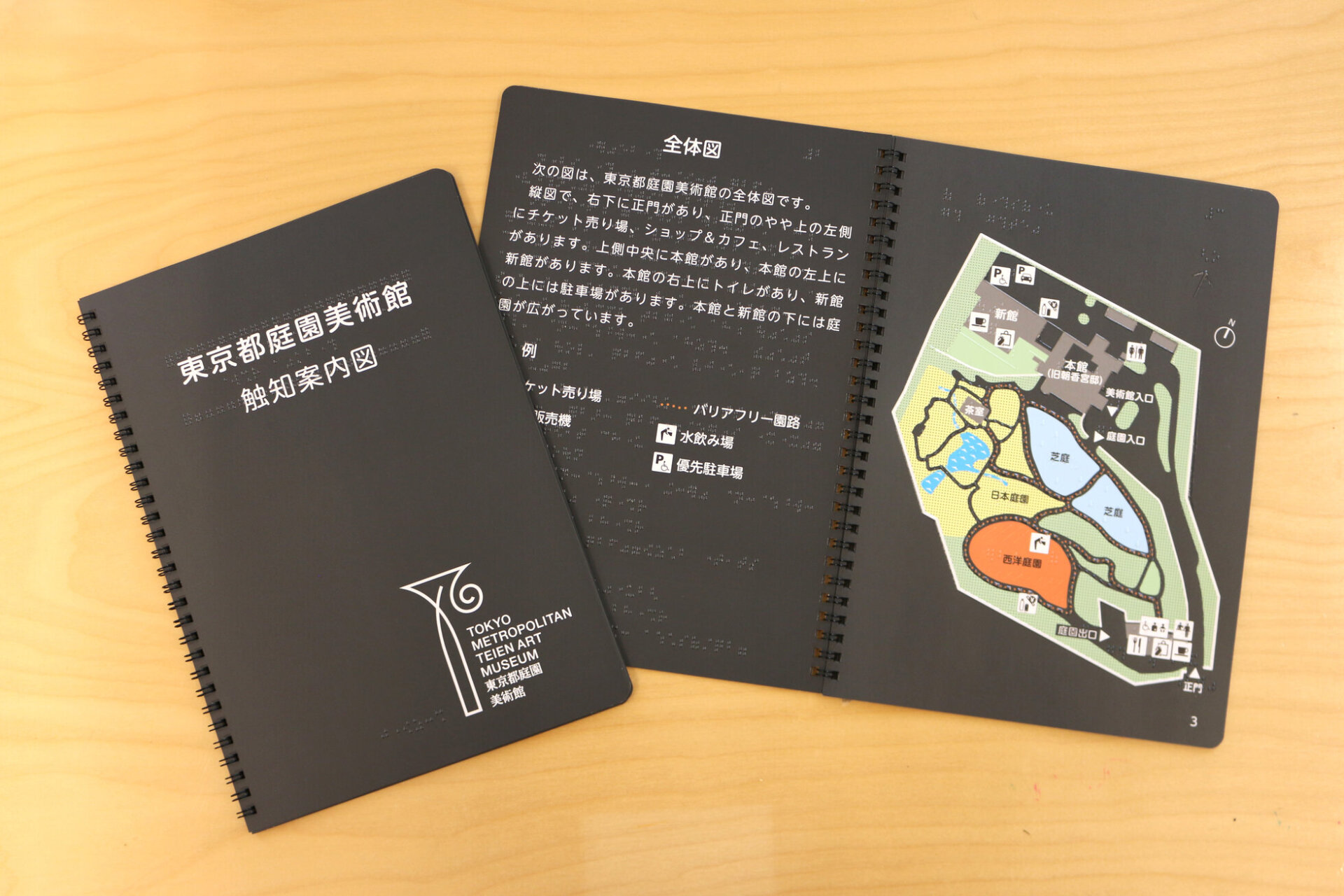
A tactile guide map with large-print text and Braille is available free of charge for visitors with visual impairments or low vision. If you would like one, please ask reception staff at the Main Building.
Copies can also be sent by mail.
- Tactile Models (Permanently Installed)
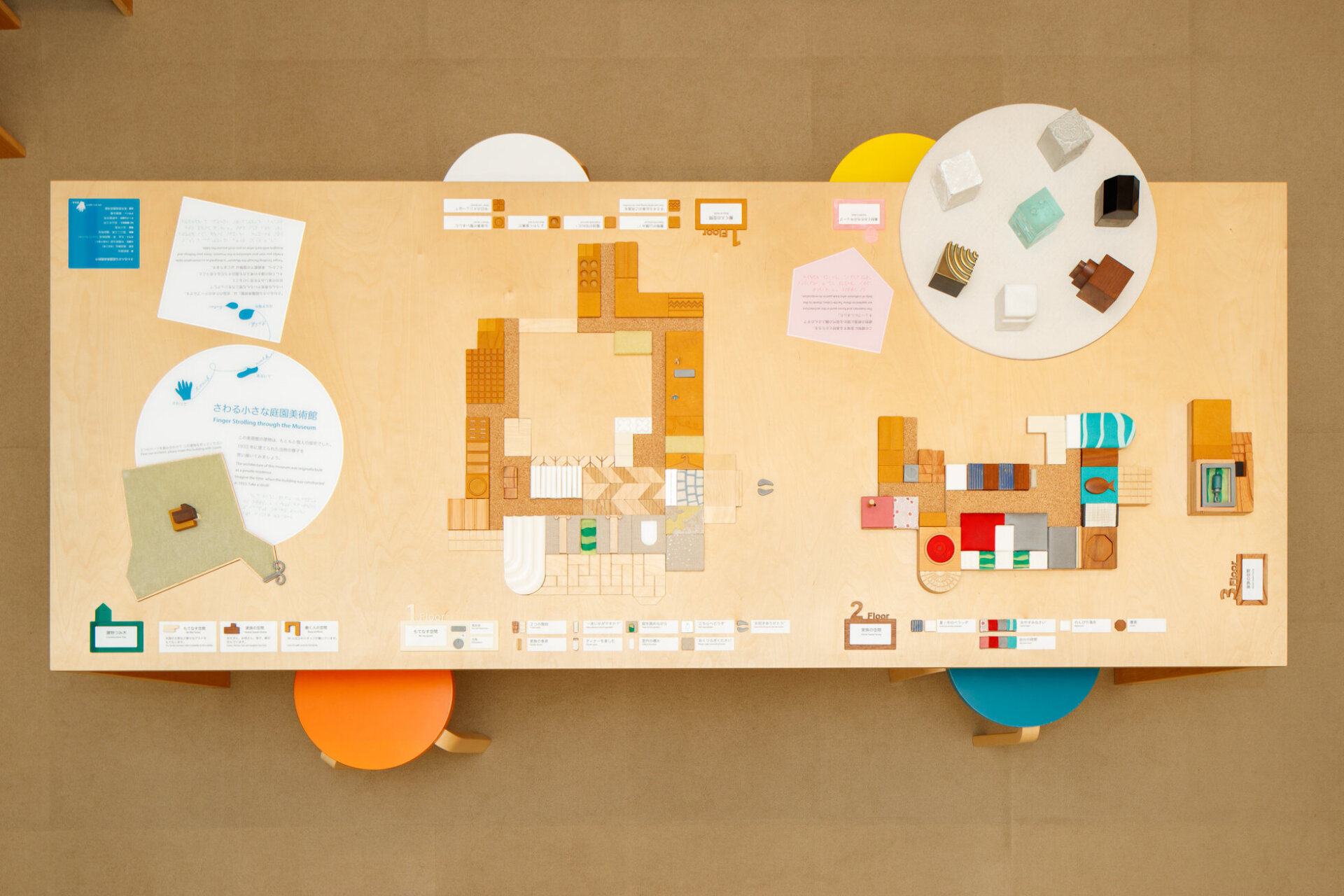
Tactile models for hands-on appreciation are available in the Main Building Welcome Room.
For details, please see our website’s Welcome Room “Finger Strolling through the Museum” page.
- Tactile Book
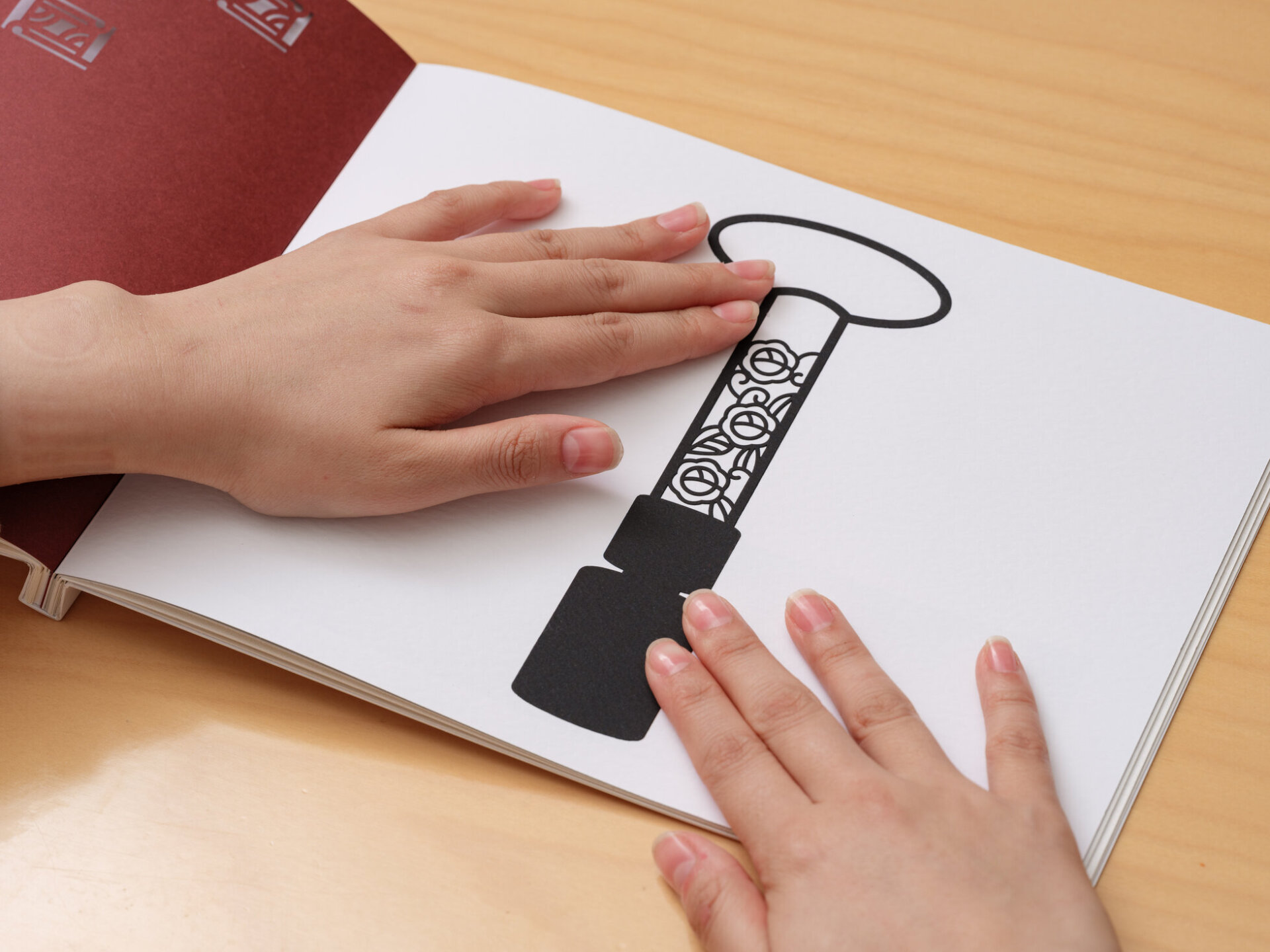
Tactile Books are available in the Welcome Room, allowing visitors to touch and enjoy the decorative designs and patterns of the Main Building (Former Residence of Prince Asaka).
If you would like to use one inside the museum, please ask Welcome Room staff.
- Official App
The app offers commentary on the museum building through images, text, and audio.
You can download it to your own smartphone or borrow a device in the Welcome Room (photo ID is required).
For details, please see the Tokyo Metropolitan Teien Art Museum Official App on the App Store or on Google Play.
- Route Guide for Visitors with Visual Impairments
A route guide from JR Meguro Station to the museum for visitors with visual impairments is available.
Route Guide for Visitors with Visual Impairments (PDF, 2.35 MB)(Japanese only)
- Videos Introducing Facilities
・Japanese Sign Language facility introduction video (with Japanese audio guide and Japanese subtitles)
・Japanese Sign Language introduction video for the Former Residence of Prince Asaka (Main Building) (with Japanese audio guide and Japanese subtitles)
・Kōka Teahouse introduction video (with Japanese Sign Language and Japanese subtitles)
・Kōka Teahouse introduction video (with English narration and English subtitles)
- Writing Boards
Writing boards are available at the ticket counter, Main Building reception area, and the Welcome Room.
Gallery and security staff also carry writing utensils.
- Communication Sheet
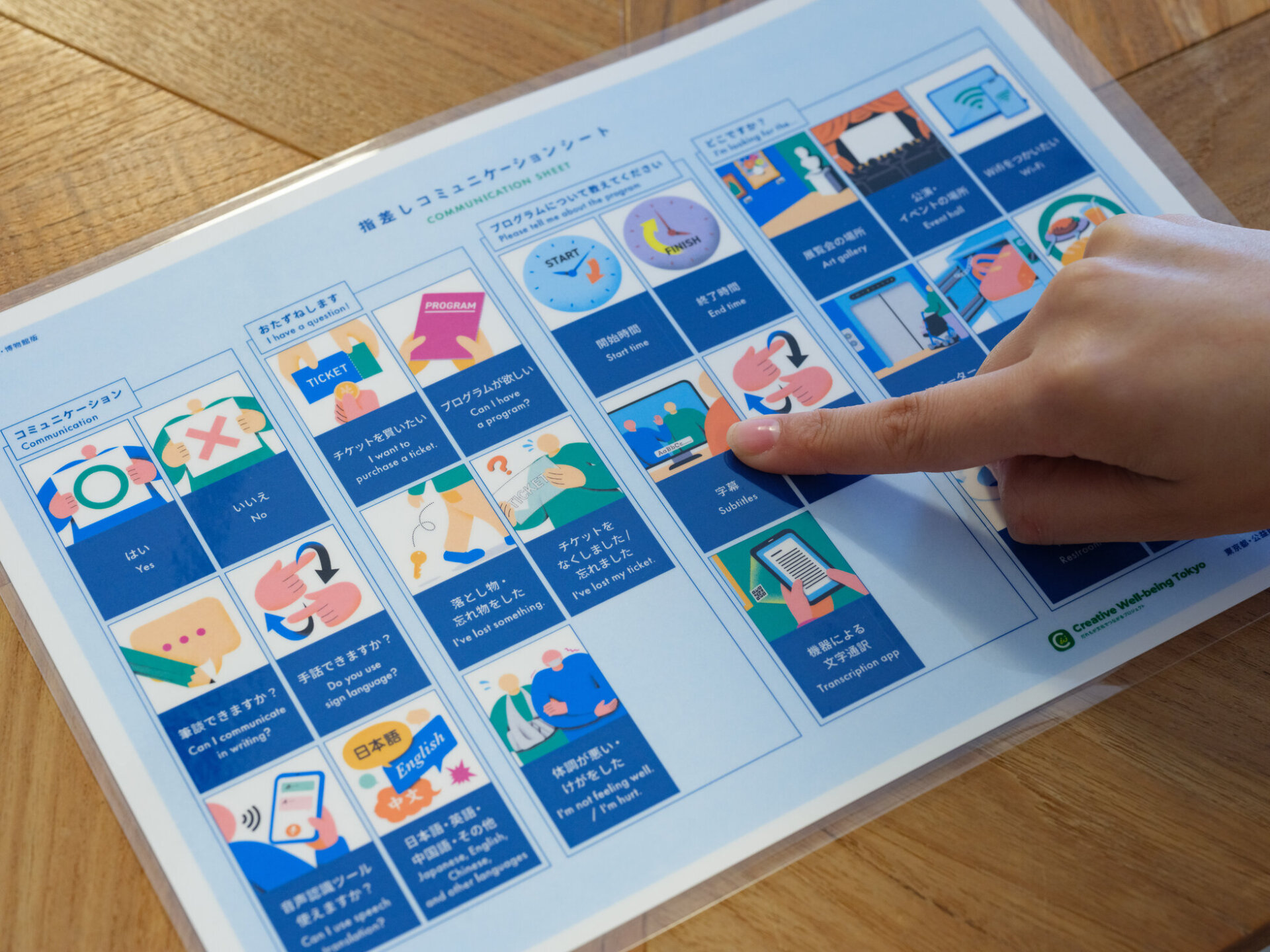
A Communication Sheet is available at the Main Building reception area, allowing visitors to communicate with staff by pointing to illustrations and text.
- Emergency Evacuation Signage
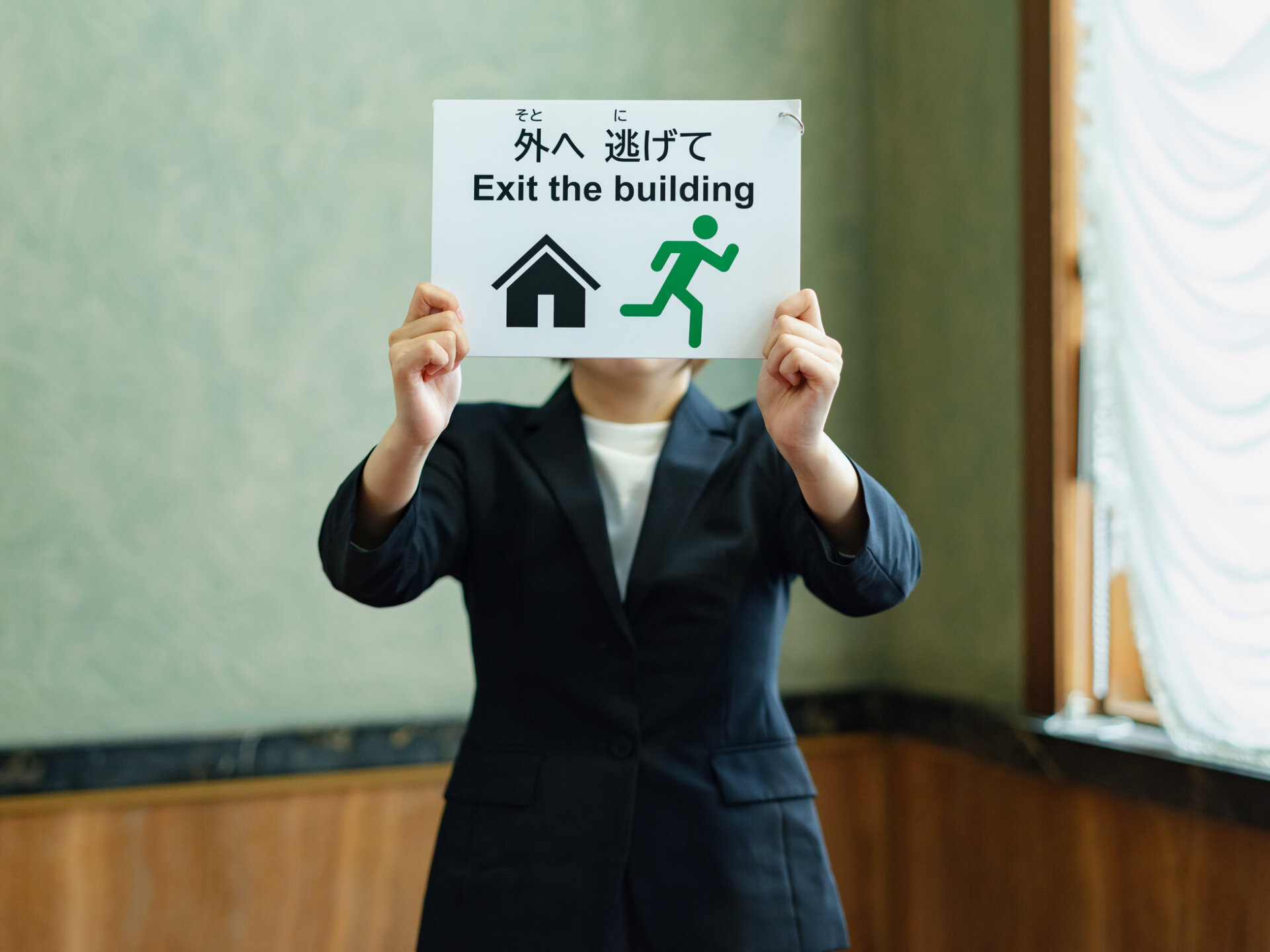
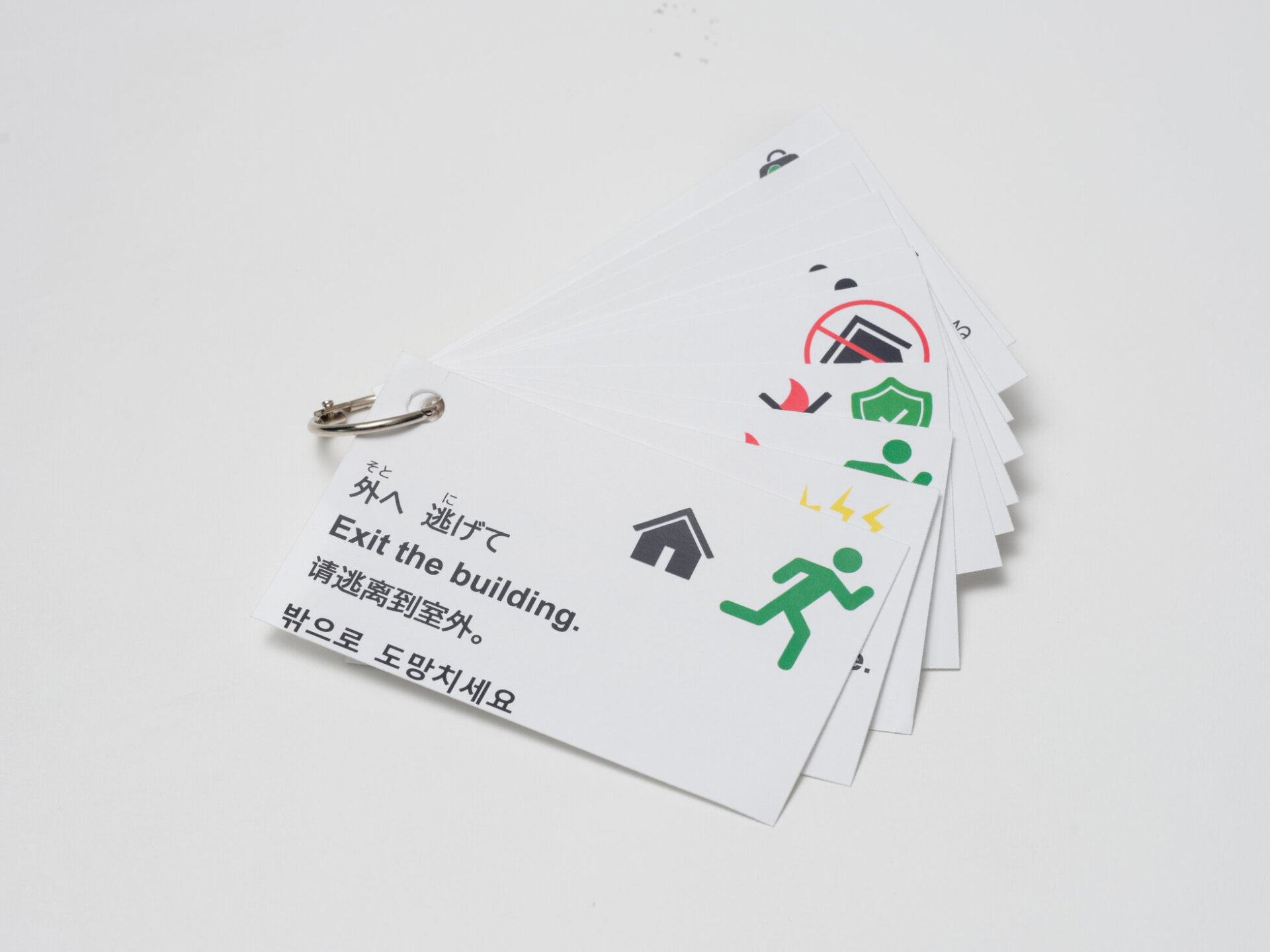
In the event of a disaster or emergency, evacuation guidance will be provided using flip boards with Japanese, English, and illustrations, as well as multilingual communication cards.
- Official App
The app offers commentary on the museum building through images, text, and audio.
You can download it to your own smartphone or borrow a device in the Welcome Room (photo ID is required).
For details, please see the Tokyo Metropolitan Teien Art Museum Official App on the App Store or on Google Play.
- Videos Introducing Facilities
・Japanese Sign Language facility introduction video (with Japanese audio guide and Japanese subtitles)
・Japanese Sign Language introduction video for the Former Residence of Prince Asaka (Main Building) (with Japanese audio guide and Japanese subtitles)
・Kōka Teahouse introduction video (with Japanese Sign Language and Japanese subtitles)
・Kōka Teahouse introduction video (with English narration and English subtitles)
- Plain Japanese Guidebook
A Plain Japanese Guidebook summarizing the museum’s points of interest and visitor information in easy-to-understand Japanese is available at the Main Building entrance and other locations.
Plain Japanese Guidebook (PDF, 2 MB) (Japanese only)
- Sensory Kit
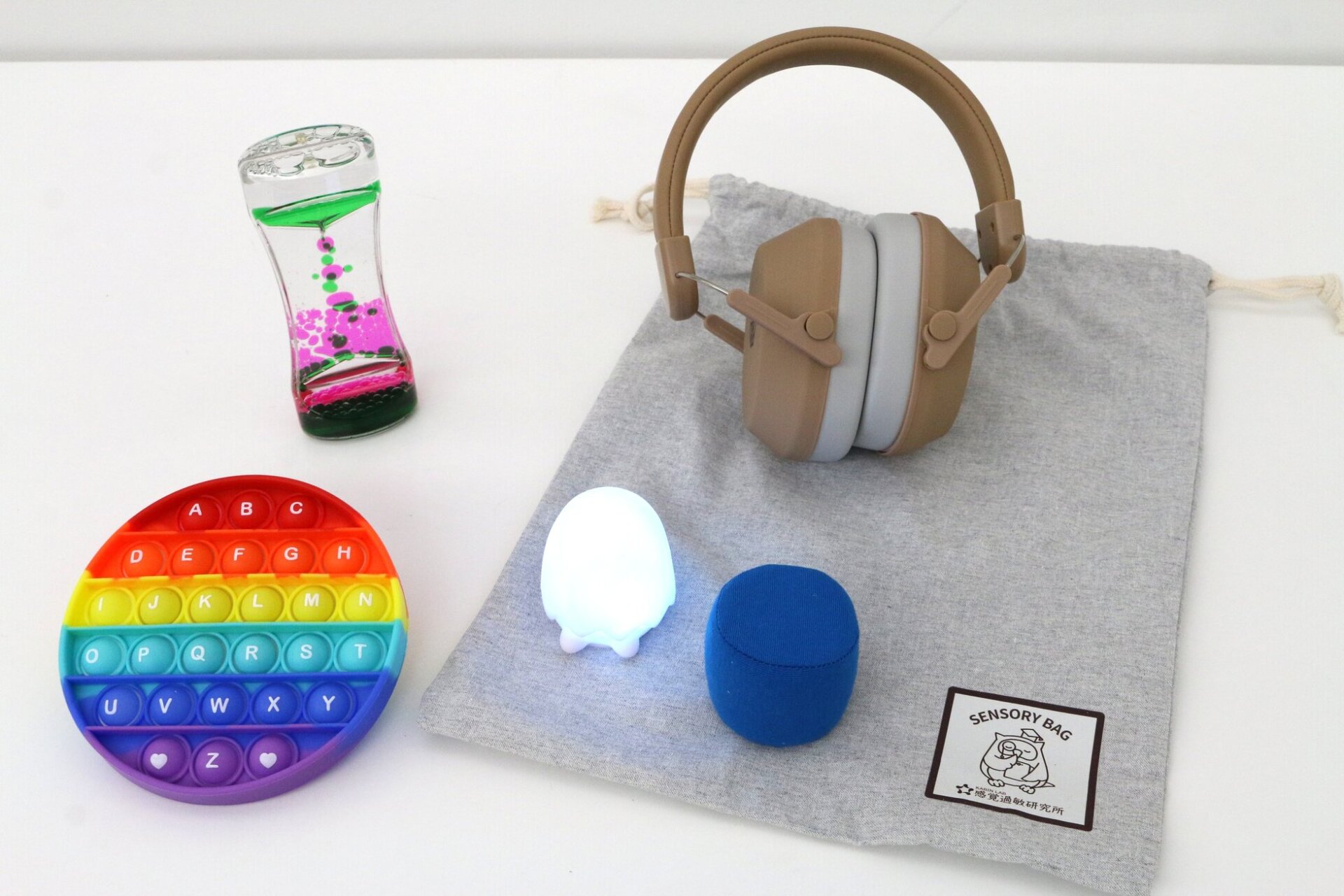
Noise-reducing earmuffs and sensory toys are available in the Welcome Room for use inside the museum. If you would like to use them, please ask Welcome Room staff. Please note that supplies are limited.
- Writing Boards
Writing boards are available at the ticket counter, Main Building reception area, and the Welcome Room.
Gallery and security staff also carry writing utensils.
- Communication Sheet
A Communication Sheet is available at the Main Building reception area, allowing visitors to communicate with staff by pointing to illustrations and text.
- Emergency Evacuation Signage
In the event of a disaster or emergency, evacuation guidance will be provided using flip boards with Japanese, English, and illustrations, as well as multilingual communication cards.
- Official App
The app offers commentary on the museum building through images, text, and audio.
You can download it to your own smartphone or borrow a device in the Welcome Room (photo ID is required).
For details, please see the Tokyo Metropolitan Teien Art Museum Official App on the App Store or on Google Play.
- Videos Introducing Facilities
・Japanese Sign Language facility introduction video (with Japanese audio guide and Japanese subtitles)
・Japanese Sign Language introduction video for the Former Residence of Prince Asaka (Main Building) (with Japanese audio guide and Japanese subtitles)
・Kōka Teahouse introduction video (with Japanese Sign Language and Japanese subtitles)
・Kōka Teahouse introduction video (with English narration and English subtitles)
If you have any concerns or questions about your visit, please do not hesitate to contact us.
Telephone: +81 (0)50-5541-8600 (Hello Dial operator service), 9:00–20:00.
If it is difficult for you to contact us by telephone, you can also use our online contact form.